

Last week I returned to the town I grew up in, Tracy, California, to visit my nonagenarian parents. Driving past the now-closed Heinz ketchup factory that I once worked in, pictured above, I began to think about some of the big challenges the US faces in its drive to reindustrialize. One of them is California, the fourth largest economy in the world, richly endowed with resources and blessed with bountiful sunshine. Yet, those advantages couldn’t save the Heinz plant, which closed in 1998. For more than three decades, businesses have fled California at an accelerating pace even as the state has nurtured some of America’s most valuable firms.11 Why? And what does that mean for American reindustrialization?
Gruelling work in the hot summer sun
I worked a lot of odd jobs in my youth, including as a commercial salmon fisherman, a personal fitness trainer, a doorman at a bar, and a bartender in a comedy club. One of the more gruelling jobs I did was several summers at the Heinz ketchup factory in Tracy. My job was to crawl inside railroad tank cars – when the temperature outside was 115°F (~45°C) and it was much hotter inside the sunbaked railcars – to scour the insides. We then filled the cars with freshly extracted tomato paste to ship to Heinz factories across the US. San Jaquin Valley tomatoes are bright red, unlike tomatoes grown elsewhere, hence mixing the Tracy factory’s tomato paste ensured that Heinz ketchup everywhere would be a deep red.
Unassailable advantages: Fertile land, sunshine & logistics
That was one of the two reasons that Heinz chose to build the factory in Tracy in 1944: the surrounding agricultural land is the best in the world and those blistering, cloudless summers produce those ruby red tomatoes. The other reason was Tracy’s logistics. Founded as a railroad town, Tracy straddles both major rail lines and highways.22 Yet, despite these unassailable advantages, Heinz shuttered the factory. What went wrong?
“High cost”
The plant’s closure had nothing to do with either the “giant sucking sound” from NAFTA or Chinese subsidies (shockingly, China shows no interest in monopolizing global ketchup production). As a Heinz spokesperson explained at the time, the decision “was based on the high cost of that factory in California.”33 It simply became too expensive to operate the factory. When I worked there, the assistant manager of the factory mentioned to me that the unit cost of production was 2½ times that of Heinz plants in other states.
Expensive, unproductive labor
One of the most significant costs in California is labor. As a seasonal worker, depending on the area of the factory I worked in, I made between $12 and $22 per hour in 1990, equivalent to $30-$55 per hour today given the 250% increase in consumer prices since. On a full-time equivalent basis, the higher wage was $44,000 per year then, and $110,000 per year in today’s dollars. And that doesn’t include overtime, which was frequent during tomato season, where I was paid 1.5x the standard hourly rate.
Union blues
California’s labor laws, particularly its rules towards unionization and union rights, are an important contributor to cost. As a “union-shop” state, California makes unionization especially easy and subject to coercion. It also fattens union coffers by requiring all workers, whether they want to or not, to join and pay union dues. While I did benefit from the high wages the union negotiated, both I and my manager were incensed by the union’s rules restricting my work; me due to the drag on my paycheck, and him due to the drag on productivity.
“Go take a good, long nap”
To protect permanent workers, union rules required work to be allocated by seniority not merit. This rule infuriated me as a temporary worker because it meant that the union dues I was required to pay as a condition of employment put me last on the list for hours or higher-paying jobs. But it was worse for my (non-union) manager whose bonus depended on raising productivity. The rules incentivized workers to create more hours by slowing output. Whenever work appeared to be contracting, the unionized foreman to whom I reported would tell me to “go take a good, long nap” on top of the storage tanks where no one would see me.
Amplified by regulation
California is neither the only union-shop state nor the only one to suffer from a misalignment of incentives between workers and management, but its extensive regulations make both worse. Relative to national laws and most other states, California has a higher minimum wage, lower thresholds for overtime, more required meal and rest breaks, more generous family, medical and sick leave, broader anti-discrimination, equal-pay, retaliation, and whistleblower protections, and makes it more difficult for workers to qualify as independent contractors. California also has its own occupational safety and health agency (Cal/OSHA) that is significantly stricter than the federal OSHA.
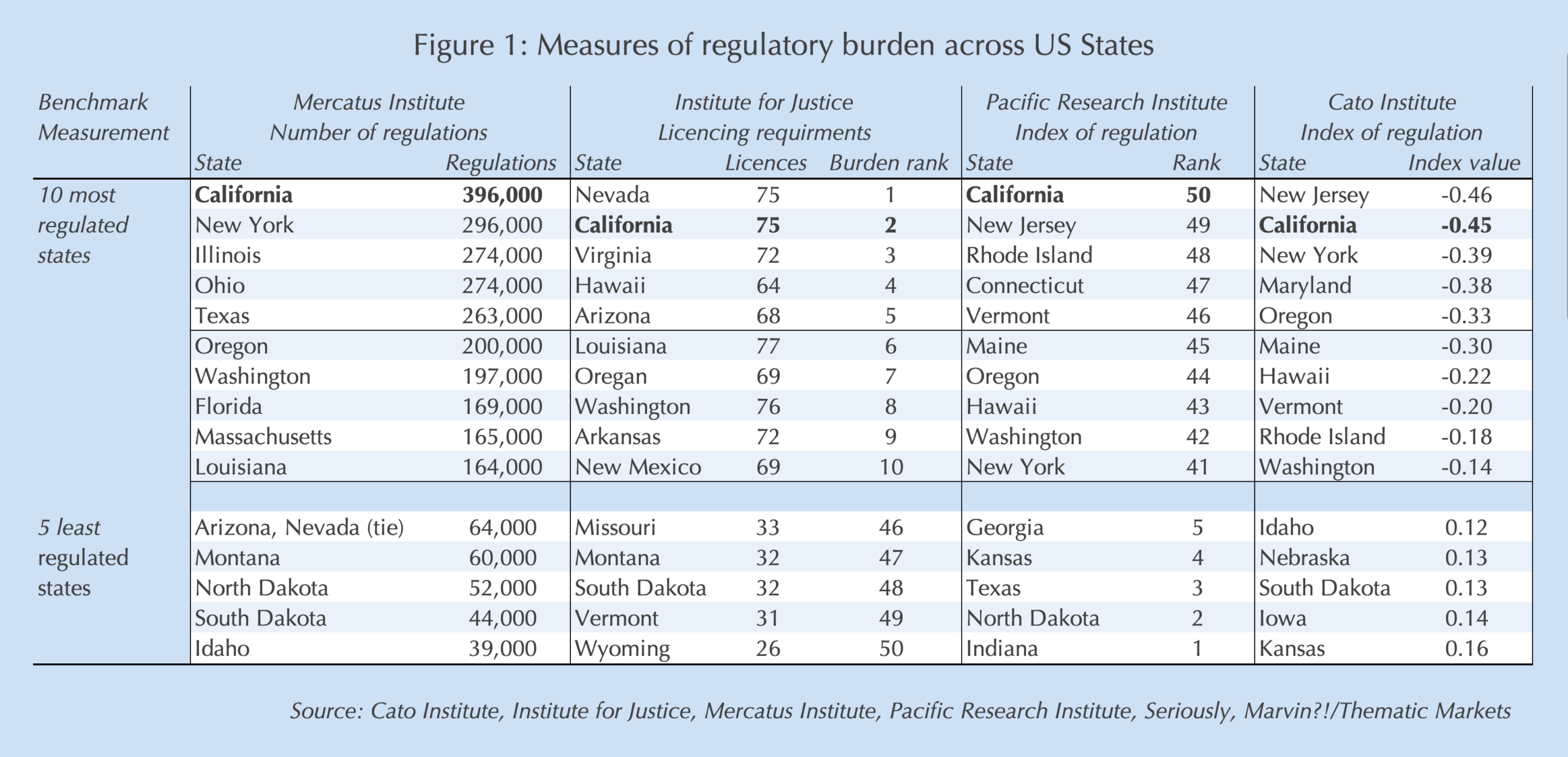
While California’s high regulatory burden may benefit workers – although that is not always the case as shown with union rules – it certainly raises the cost of doing business. California ranks first or second among the fifty US states in regulatory burden in each of four different benchmarks, as shown in Figure 1.4What is even more striking is the margin of its regulatory over taxation: California requires nearly three times the number of licences for low-income occupations and has more than ten times the number of regulations as the least regulated states in each category. It’s difficult to put a price tag on regulations, but the effect is clear: a third of the 31,490 businesses that fled California in the last decade attributed it to the cost of regulations.45
Environmental and energy burden
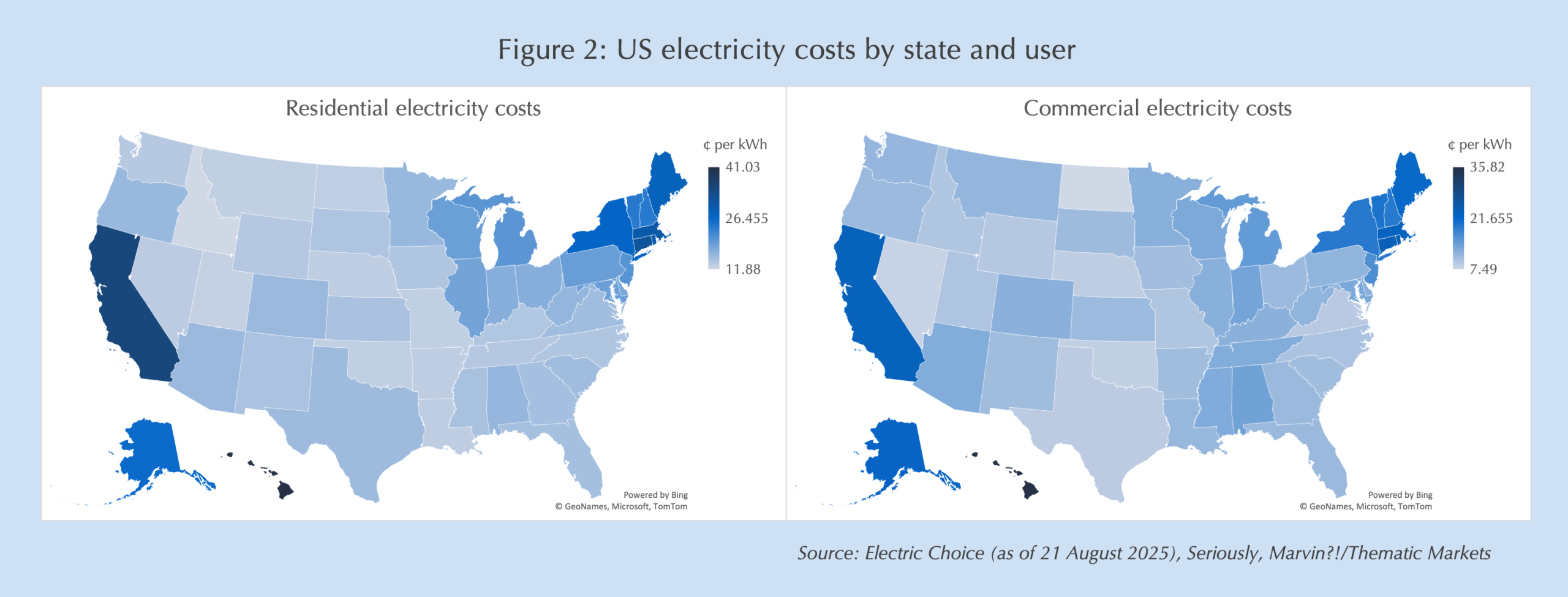
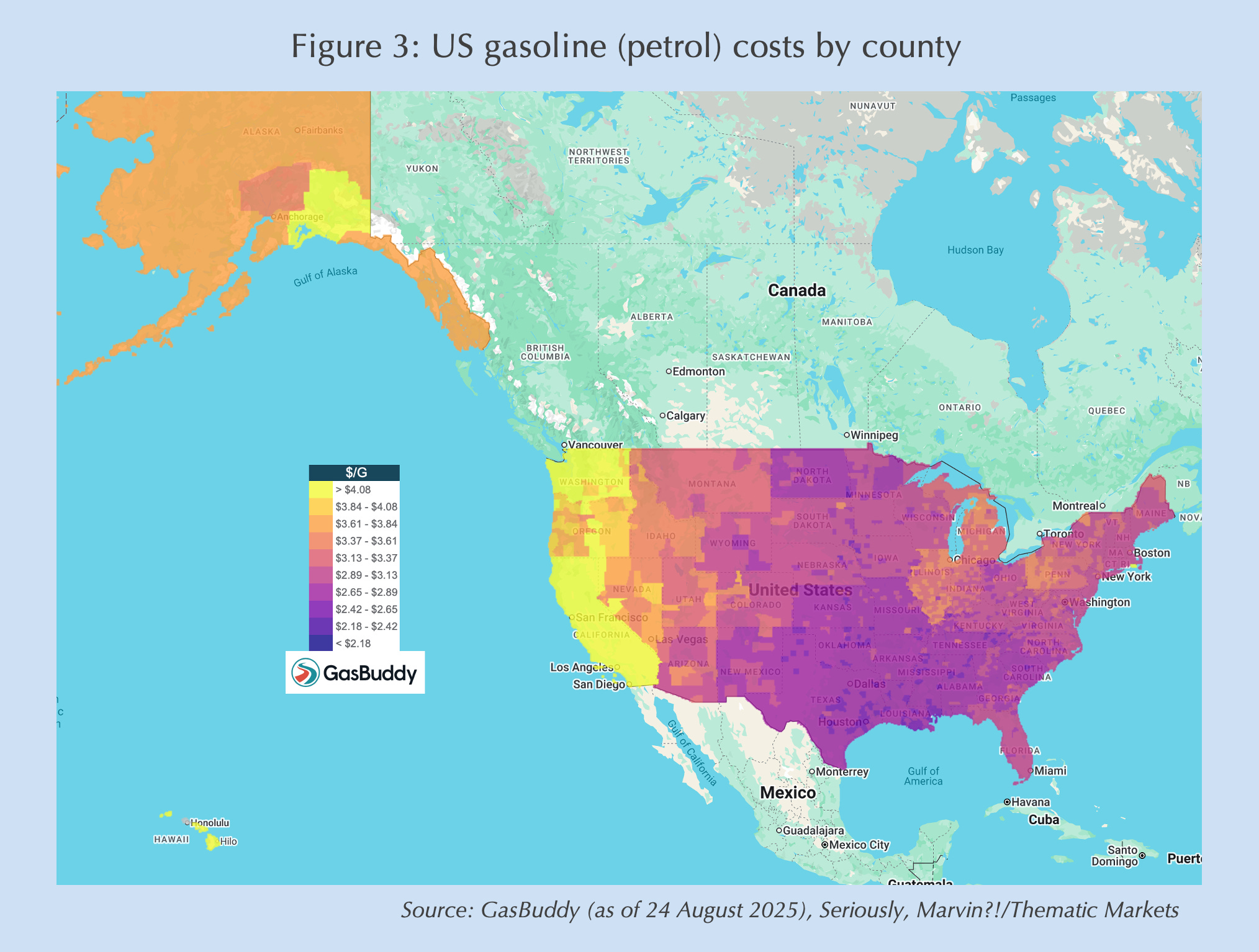
There is one set of regulations that has a clear implicit price tag: environmental and energy policies that raise California’s energy costs above its peers. Whether it is residential and commercial electricity costs, where California ranks second highest after island-state Hawaii (Figure 2), or the gasoline and diesel fueling commutes and logistics (Figure 3), California’s strict environmental policies and fuel taxes make living and operating businesses far higher than most other states.
Et tax Brute?
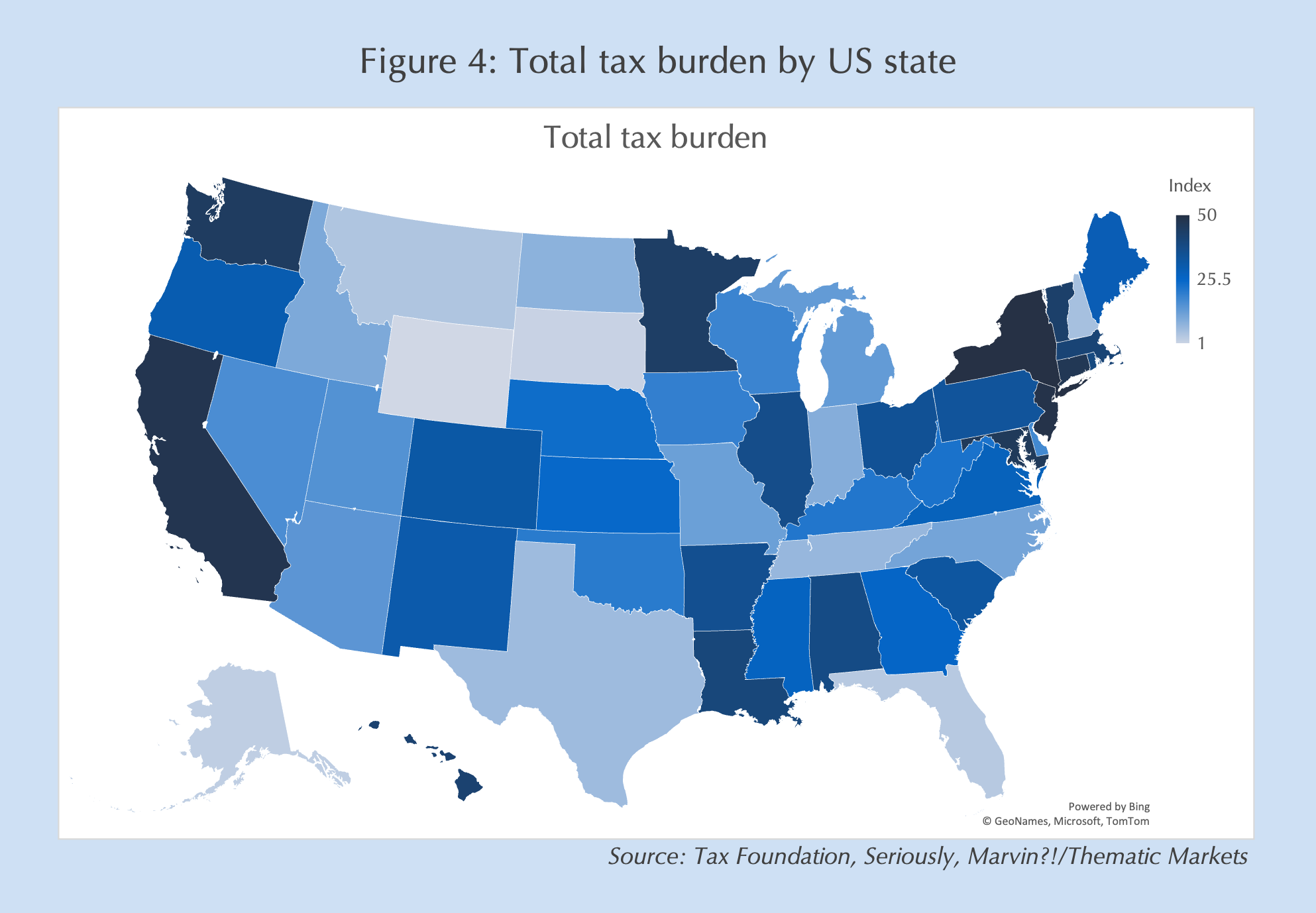
Fortunately for current Californians, their predecessors – most of whom, like me, have long since left the state – passed a binding referendum in 1976, Proposition 13, that limited property taxes in the state.56 Otherwise, California would also have the highest tax burdens in the country, instead of the third highest after New York and New Jersey (Figure 4).
Non-traded goods, aka real estate
Regulation, environmental policies and taxes sharply raise the cost of doing business in California, but even without those the state still would be extraordinarily expensive due to the cost of “non-traded” goods. Real estate is the quintessential non-traded good, i.e. something that cannot be traded across borders. But the cost of real estate raises all other non-traded goods like haircuts, schools, grocery stores, movie theaters, bars, and restaurants since the workers in those services require wages high enough to afford housing in the state. This is the main reason why the cost of living in California, especially in the counties lining the coast, is the most expensive in the US (Figure 5).
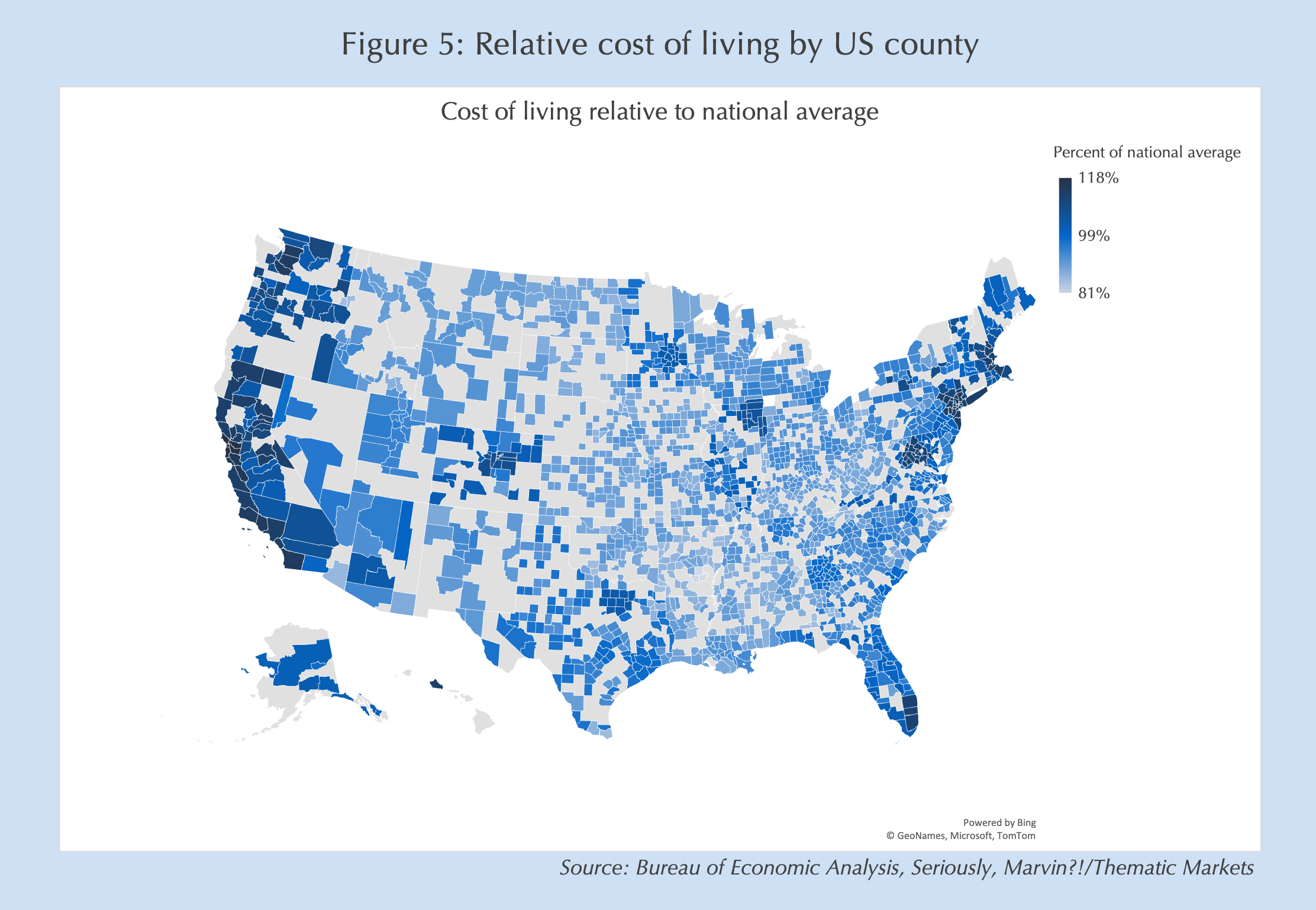
Let’s make the cost of California’s non-traded goods concrete. Recall that my fulltime-equivalent annual income at the Heinz plant – straight out of high school, mind you – was an astounding $110,000 in today’s prices (versus a median US household income of $80,610). Suppose that I wanted to buy a house. A median home in Tracy – a dusty, hot, semiarid bedroom community that is nearly a two-hour commute from San Francisco or San Jose – costs $716,824. At current mortgage rates, the cost of that median house, including mortgage insurance and property taxes, would eat 61% of my gross paycheck.67 After federal and state taxes, I would have just $11,092.66 per year left to pay the mainland’s highest gasoline, electricity and food costs (despite living on the best agricultural land in the world).78 Remembering that Tracy is nothing like the California of the movies – those parts of California are way more expensive – it is clear that only the highest-value-added traded goods production makes sense in California.
High-class problems
This is the crux of California’s cost problem. California’s high non-traded goods’ prices result from the extraordinary wages its remaining industries can afford to pay. Silicon Valley, Hollywood, their nexus in the gaming industry, biotech, and venture capital generate such fantastic returns that they can afford to pay hoodied software engineers exorbitant salaries to lounge on beanbags and drink designer teas. That makes reindustrialization – especially in strategic but lower-margin industries like steel, aluminum or even autos – incredibly difficult.
Mismatched preferences
But this is also the reason why forced reindustrialization through tariffs is costly to American welfare. Even if you were to shift Californian workers to a lower-cost state (like Alabama), you would be trading a job that might add $150,000 of value for one that creates $70,000 in value. Due to cost of living differences, the worker’s real income would fall by about $50,000, not $80,000, but there would nonetheless be a loss.89 This is why studies of tariffs’ effects typically find that even when tariffs raise output, wages and profits in the protected industry, national income suffers.910 For the world in which we currently live – one that includes the distortionary industrial policies of China and other economies – US resources are (largely) efficiently allocated.
Optimal versus preferred
But that doesn’t mean that they’re optimally allocated. For instance, paying for insurance usually results in a net loss: most people never recoup from insurance what they pay in premiums. But people still buy insurance to protect against “what if.” Western economies now face a similar situation due to their Faustian bargain of outsourcing much of their critical manufacturing to China. If nothing bad happens, they are better off with current allocations of labor and capital within their economies. But as we experienced with Covid, not having domestic production of medicines or medical equipment posed serious risks in a pandemic. If a dispute over Taiwan breaks out, it won’t be just medical equipment; the West would be cut off from critical rare earths, magnets and semiconductors. As a result, Western countries now need to pay an insurance premium for security.
The cost of insurance
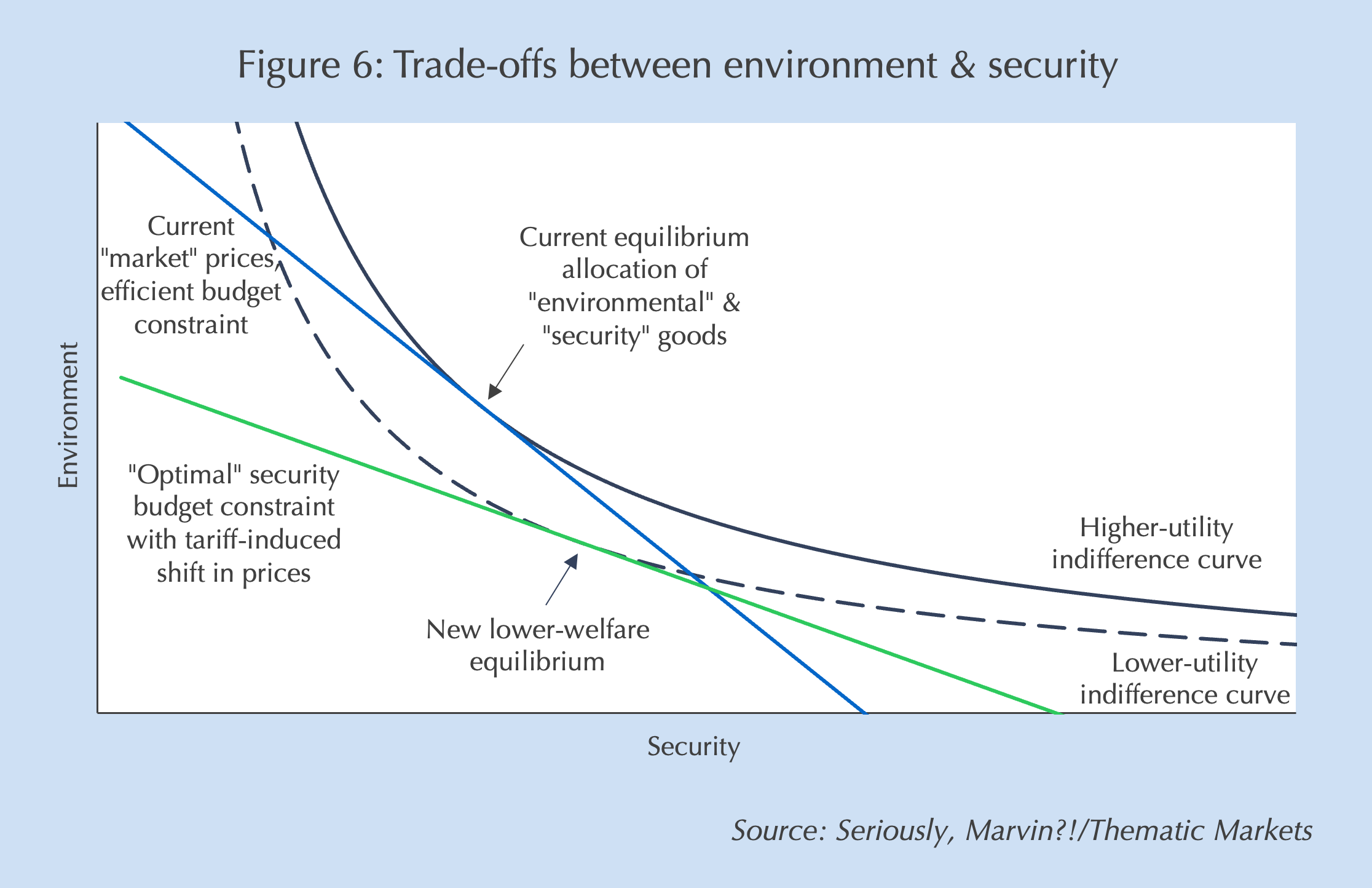
The insurance premium is a loss of economic welfare. Western economies will have to trade consumption of something for greater security. It may mean giving up some new features from Facebook or Apple in California to build more missiles in Alabama, or driving more expensive US cars and fewer Korean ones. But it also likely will mean giving up expensive “nice-to-haves” like California’s strict environmental rules to make more steel and aluminum that require a lot of energy to make (The Brawl Street Journal). In economics terms, this means that the West may require a stepdown in welfare (drop from the “higher-utility” solid “indifference curve” to the lower-utility dashed one in Figure 6) as tariffs shift the relative prices of consumption of nice-to-have environmental “goods” and essential security “goods” to encourage more production of the latter (the move from the blue budget constraint to the green one in Figure 6).
Why California matters
One of the benefits of a country as large and diverse as the US is that it can replicate the benefits of global trade and specialization of labor within its own borders. Hence, the US ostensibly could reindustrialize – e.g. the Rust Belt – without the participation of California. Unfortunately, California is just too big, too interlinked, and too resource rich not to participate in US reindustrialization. As Doomberg has discussed, California’s regulatory reach extends across the US, its drive to shutter oil refineries threatens both its own economy and US supplies, and, given that California is the largest consumer and a significant producer in the Western Interconnection electrical grid, its relentless pursuit of wholly renewable energy threatens stable transmission of electricity to most of the Western US and parts of Canada and Mexico. Unlike Vegas, what happens in California doesn’t stay in California.
California is 15% of the US economy and critical to US success. The state possesses some of the largest hydrocarbon deposits in North America, among the most productive farms, fisheries and forestry, and vast mineral deposits, including rare earths. And while it no longer is the powerhouse of manufacturing it once was – Los Angles County alone produced 10% of US industrial production as late as 1990 – it likely needs to be part of any US reindustrialization plan. Perhaps not making ketchup again, but it likely should be making rockets, aircraft, advanced electronics, medical devices, and pharmaceuticals in the quantities it once did.









Comments are available to paid subscribers only.