

Friday’s passing of yet another tariff deadline – unfortunately not the last – gives a clearer picture of the Trump trade strategy. At least for some. As with all things Trump, ideological bias still clouds much of the commentary. President Trump’s supporters have seized upon deals with the European Union, Japan, South Korea, and others as a “masterstroke,”11 conveniently ignoring a tenuous truce with China critical to US industrial supplies and souring relations with India and strategically important African states.22 Trump critics, many of whom were adamant that President Trump’s unilateral approach would never yield any agreements, have twisted themselves into pretzels to explain how President Trump “climbed down”33 in an EU trade deal that was simultaneously described as the “unthinkable surrender” of Commission President Ursula von der Leyen.44 Confused? Don’t be. Let’s breakdown what we’ve learned about President Trump’s trade strategy.
The Three Rs
In the second installment of my assessment of President Trump’s first 100 days in office I introduced the “Three Rs” to explain why tariffs would be extensive and larger than markets expected. The Three Rs are the motives driving the tariff policy:
- Re-industrialization: Incentivizing firms to produce in America.
- Revenue: Fiscal revenue to reduce the deficit or income taxes.
- Reprisal: Coercion to correct perceived unfair trade policies, underspending on defense, or cooperation with China.
Note that only one of the Three Rs – Reprisal – is explicitly open for negotiation. As such, it is also responsible for most of the chaos perceived by people who apparently have never been to a bazaar or negotiated for a used car. Both Re-industrialization and Revenue are wholly at odds with negotiation. Tariffs need to be costly and near universal to encourage firms to move production back to the US, and to meaningfully dent the massive US fiscal deficit.
Re-industrialization: check; Revenue: check…
The inflexibility of the first two motives is clear in the 50% aluminum, copper and steel tariffs, the 25% autos tariff, and the broad 15% tariff that applies to most countries. Whether one agrees with the approach or not, the universal tariff moat provides a strong economic incentive to move manufacturing of any higher-value-add activities to the United States. (At 15%, lower-value-added goods production likely will remain in cheaper, lower-skill economies, hence tariffs on those goods will end up being a pure consumption tax for US consumers.) They also will bring in a lot of revenue: Of the roughly $360 billion-$393 billion (1.25-1.35 percentage points of GDP) in new tariff revenue that I estimate the revised tariff regime will generate in the next year, approximately 80% of it is generated by the 15% across-the-board tariff.
Crime and punishment
The reprisal aspect is clear in the list of countries facing both more punitive and lenient tariffs. Apparently, for the crimes of prosecuting its former president, Jair Bolsonaro, a Trump ally, and recognition of a Palestinian state, respectively, Brazil and Canada have been hit with tariffs of 50% and 35%.55 But there are deeper issues. Canada’s tariffs also appear to reflect ongoing tough negotiations and a lack of Canadian concessions on long-standing US-Canada disputes.66 Brazil’s punitive tariff, like those applied to other “BRICS” – and incongruously, Switzerland – also reflects too-close cooperation with and integration into China’s supply chains.77 Other high-tariff states like Algeria, Iraq, Laos, Libya, Myanmar, Serbia, and Syria similarly are too close to US adversaries like China and Russia.
But the reprisal motive is also apparent in the lower-tariff countries. Vietnam’s 20% tariff is less than half the “Liberation Day” tariff of 46%; the EU’s and Japan’s 15% tariffs (with quota-rated exemptions for nearly all EU aluminum and steel) are reduced from 20% and 24% respectively, and interim threats of 50% on the EU. Staunch US allies like Australia and the UK even managed to get 10% tariffs. The difference was that all these “winners” played ball in negotiations, offering concessions to the US that those on the high-tariff list have not.
The China funnel
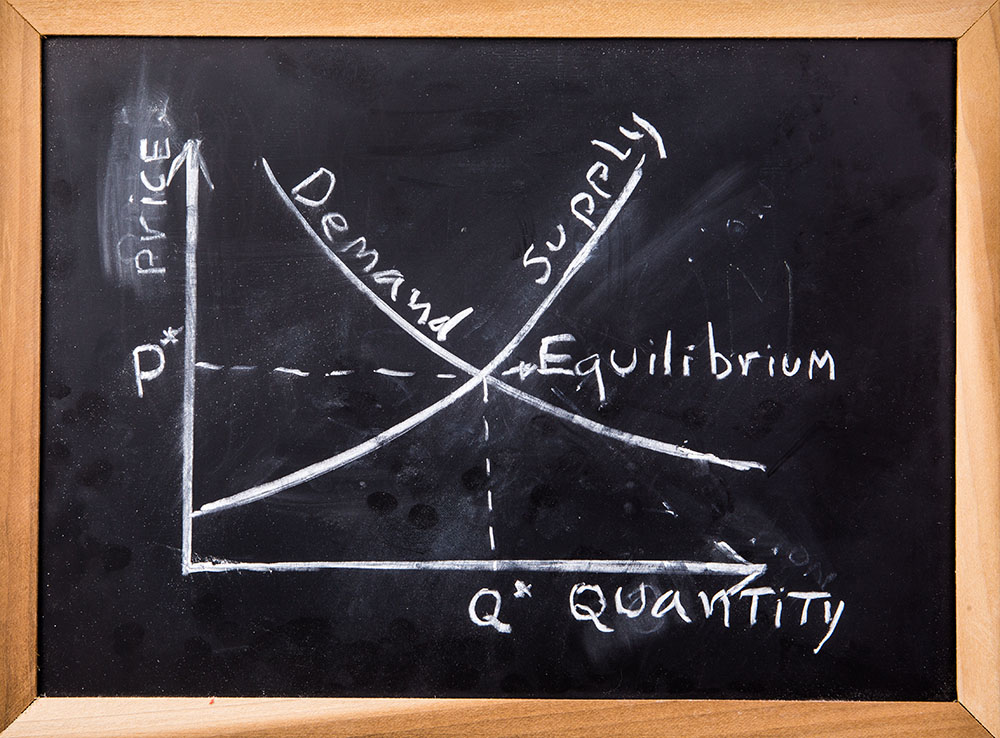
The trade deals also appear to confirm the “China funnel” that I also postulated in my 100 days review. China’s explosion of excess capacity, not just in autos but across industries, have increased economic pressure on every economy. The Trump tariff wall intensifies the pressure by simultaneously diverting Chinese goods to other countries and reducing those countries’ access to US consumers. The effect is powerful given that the US economy represents 25% of global demand and far more on a net basis due to its trade deficit. Further, the pressure intensifies with each deal the US concludes, narrowing the “funnel” of countries forced to absorb China’s excess capacity.
This is why President Trump’s critics were wrong to anticipate failure in his unilateral approach. Whether they like it or not, few economies have a choice but to accept “humiliating” trade deals.88 For all the criticism that President van der Leyen has taken, the reality is that she had no choice but to accept US terms (and given the exemptions for metals fabrication, specialty chemicals, aircraft parts and other critical goods, the terms are not as bad as advertised). The EU is one of the most trade-dependent economies in the world: losing access to the US market amid an onslaught of Chinese manufactures was simply untenable. To use President Trump’s analogy, he held all the cards.
Binding Global bifurcation
The Trump Administration appears to be using those cards to play for Global bifurcation: economically binding trading partners to the US while separating them from China. Details of the trade “agreements” are hazy, but three clauses are common across them: (1) restrictions on Chinese investment or inputs into critical supply chains; (2) steep 40% tariffs on “transshipments” of goods from other countries (e.g. China); and (3) quotas for goods from strategic industries that US allies also need to rebuild that are exempted from US tariffs.99 Additionally, the EU, Japan and South Korea committed to both large investments in the US economy and large purchases of commodities, goods and military equipment (the UK also made unspecified commitments on military procurement).1010 While these have been portrayed as a form of imperial tribute, they achieve something far more strategically durable: they simultaneously embed US inputs into deal-country supply chains and give those countries “skin in the game” of US re-industrialization by offering them partial ownership.
But what about China?
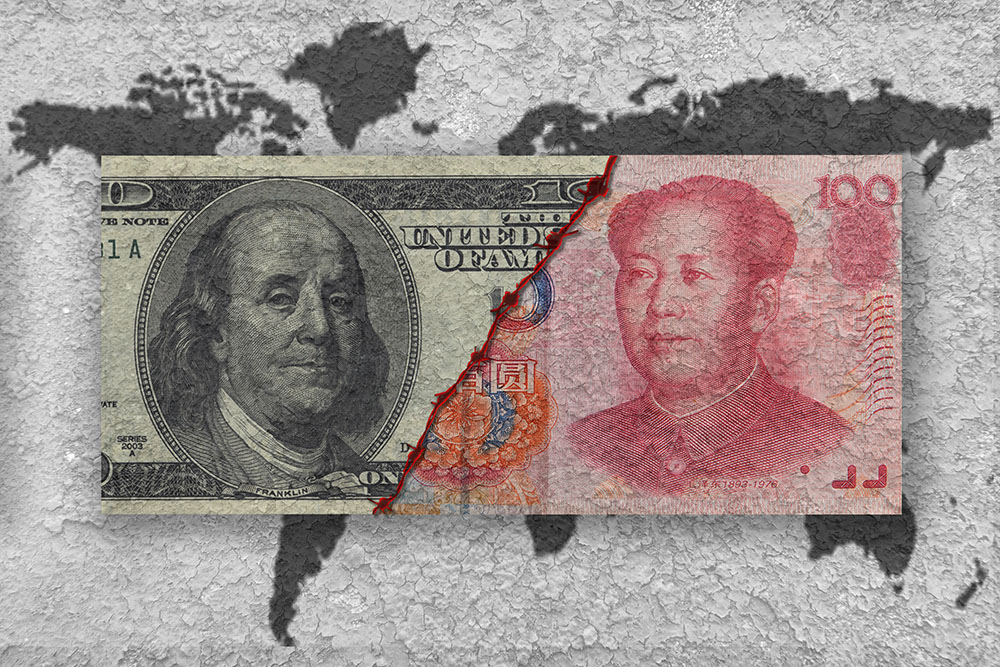
Yet, for all its efforts to exclude China in other trade deals, the US has “only” applied a middle-of-the-pack 30% tariff, at least until the existing truce expires next week. While it has puzzled many, the tariff incongruity like the US refusal to allow Taiwan President Lai Ching-te stop-over rights in New York on his way to Brazil last week is explained simply:1111 China holds too many high-powered cards and tensions may already be too high. As I’ve noted(repeatedly), the risks of kinetic warfare with China are higher than markets estimate and short of war, China maintains a death grip on critical inputs to the American economy that it has mysteriously not fully exercised. (See the latest from Doomberg, Crescendo, for another point of view of how close to the wind the Trump Administration is sailing with China.)
The Trump Administration probably (correctly) perceives that its latitude for movement against China is limited. Hence, it is taking a sequenced approach. First it is moving to address its most critical vulnerabilities – as seen in its strategic investment in MP rare earths1212 – and to secure and exclude China from its broader global supply chains. The former puts China on notice that its economic weapons have a sell-by date, while the latter is already drawing protest from Beijing.1313 Only once those supply lines are secure can the US afford to directly and aggressively confront China on trade.
Uncertainty and “napkin trade deals”
There is still great Uncertainty regarding President Trump’s trade deals. Renewing the China truce when it expires next week is critical. Also on the to-do list are deals with nearest neighbors and largest trading partners, Canada and Mexico, strategically important countries like India, Nigeria and other African nations, and managing the response from non-aligned and adversarial countries alike to threats of 100% tariffs on economies that buy Russian oil.1414 Even for the deals completed, some have rightly noted that these are “napkin trade deals”1515 with scant detail and no seemingly legal validity, while still others have called out the complete implausibility of some of the agreed terms (e.g. Europe’s natural gas purchases).1616 All of these keep Uncertainty high.
Yet the contours of what the Trump Administration is trying to achieve with tariffs – the Three Rs – and roughly what the end state will resemble are taking clear form. Stragglers are likely to agree to terms under the intense pressure of the China funnel created by the US demand and Chinese supply machines. Further, in the new global order of La Cosa Nostra Americana compliance will follow not because of tight legal contracts, but because no one but a rival Capo famiglia like China is going to cross the Don on an agreement, even if it was written on a napkin.




Comments are available to paid subscribers only.